How Do We Know Students Are Actually Learning?
How Do We Know Students Are Actually Learning?
The Authority Companion Episode
How do we know students are actually learning, rather than simply completing assignments, following directions, or producing the right answers?
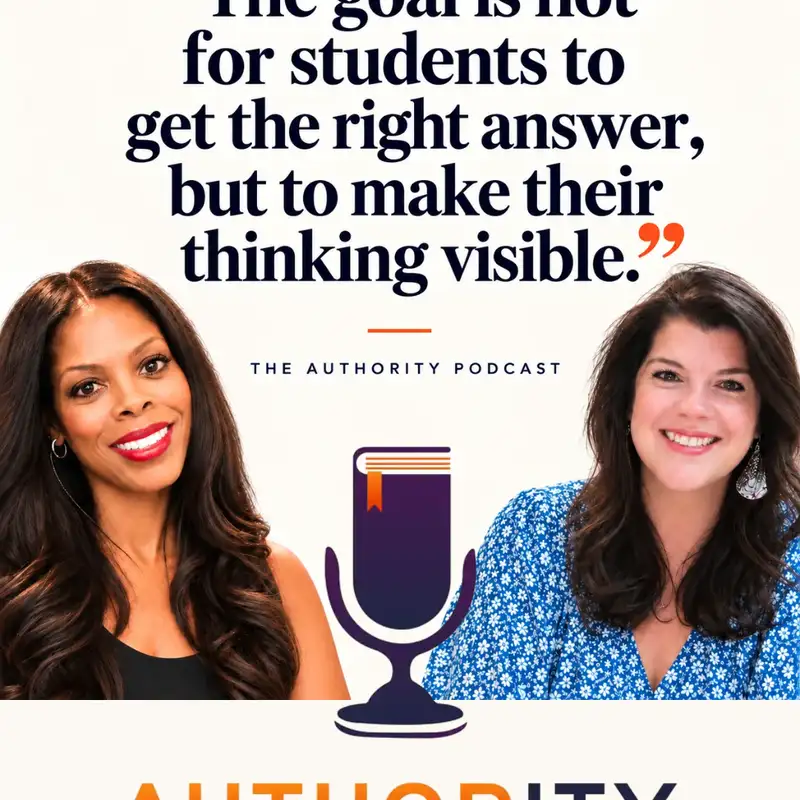
Lindsey and Tasha continue their conversation, inspired by Lori Cohen and The Science of Lesson Planning, exploring what happens when educators design lessons around evidence of student understanding.
Together, they discuss practical ways teachers can make thinking visible, how school leaders can encourage reflection without introducing another overwhelming initiative, and why protecting human judgment matters as AI becomes more common in classrooms.
In this episode, we discuss:
- Why compliance, engagement, and completed assignments are not necessarily evidence of learning
- How hinge questions help teachers see what students understand and determine what should happen next
- Why educators need to plan their response to student understanding, not just plan the learning activity
- How instructional practices can become automatic when teachers lose sight of why they use them
- Why leaders can encourage deeper professional thinking by asking curious, open-ended questions rather than prescribing solutions
- How psychological safety gives both teachers and students permission to take risks, make mistakes, and grow
- Why Lori's lesson-planning framework may look different for new teachers, veteran teachers, and educators working with prescribed curricula
- How instructional systems can emerge from effective practices rather than being imposed before schools understand what works
- Why AI has exposed existing questions about critical thinking, student ownership, and evidence of learning
- How teachers can use AI as a thinking partner without outsourcing professional judgment
- Why meaningful relevance can come from helping students understand how today's learning connects to tomorrow's work
- How leaders can introduce instructional improvements through small, collaborative experiments before scaling them across a school
Lindsey and Tasha leave educators with a practical invitation: identify one moment in an upcoming lesson when you need to know whether students truly understand, design a question that reveals their thinking, and decide what you will do with the answer.
About this companion episode
Companion episodes of The Authority give Lindsey Cannon and Natasha Nurse an opportunity to continue conversations inspired by authors and experts, examining how ideas translate into everyday decisions in schools.
In this conversation, they build on Lori Cohen's work by exploring the relationship between evidence of learning, instructional decision-making, teacher support, and purposeful use of AI. The focus is on making small, intentional changes that help both educators and students think more deeply.
Connect with Lori Cohen and Explore Her Resources
- Lori Cohen Consulting: https://www.loricohenconsulting.com/
- The Science of Lesson Planning (official publisher): https://conference.ascd.org/books/the-science-of-lesson-planning?variant=126012
- Free Transformative Lesson Planner App: https://scienceoflessonplanning.app/
- Explore Lori's books: https://www.loricohenconsulting.com/bookslist
- Connect with Lori on LinkedIn: https://www.linkedin.com/in/lori-cohen-9a447224/
Learn more about today's sponsor, Playworks:
We’re proud to be sponsored by Playworks, a 501(c)3 nonprofit organization with evidence-based practices that help schools improve the health and well-being of children by increasing opportunities for physical activity and safe, meaningful play.
We’re proud to be sponsored by Playworks, a 501(c)3 nonprofit organization with evidence-based practices that help schools improve the health and well-being of children by increasing opportunities for physical activity and safe, meaningful play.
If you’re a school or district leader struggling with the challenge of chronic absenteeism, as so many are across the U.S., you may not realize that structured recess is a research-backed approach to keep kids in school. In fact, a UC Berkeley study of Title I schools found that those partnering with Playworks had significantly lower chronic absenteeism rates. Further, Mathematica research demonstrated that Playworks schools spent 27% less time transitioning from recess back to learning, saving teachers valuable instructional time.
These results are possible for your students, too. Learn how Playworks can help you improve student-educator relationships, belonging, and attendance by signing up for a quick no-obligation conversation.
Creators and Guests

Host
Lindsey Cannon
Founder of Reify Educates and an instructional leader with 22 years of experience helping schools build clear, sustainable systems that strengthen teacher capacity and improve student outcomes.

Host
Natasha Nurse
Instructional leader with 21 years in public education specializing in inquiry-driven curriculum design, literacy, deep thinking, ethical AI integration, and professional learning.