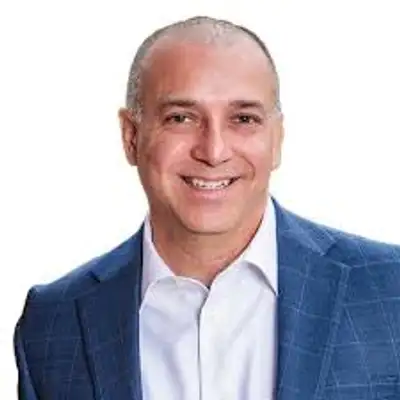
The Schools Our Students Deserve with Mario Acosta
Mario Acosta
Ross Romano: [00:00:00] Welcome in everybody. You are listening to the Authority Podcast here on the Be Podcast Network. Thanks as always for being with us. Thanks for joining us for what's going to be another great conversation about school leadership, and in particular, we're going to talk about creating and building and leading the schools our students deserve.
My guest is Dr. Mario Acosta. He has spent 20 years of his educational career as a teacher, instructional coach, assistant principal, academic director, and principal leading schools with diverse profiles. He was named a 2022 principal of the year in the state of Texas while he was the principal at Westwood High School.
Which is a US News and World Report top 50 campus, and a member of the High Reliability Schools Network. His latest book is called The Schools. Our Students Deserve a Comprehensive Framework for Shaping Exceptional Culture. It is published by Solution Tree. It's what we're talking about today. Mario, welcome to the show.
Mario Acosta: Thank you so much for having me, Ross. It's a pleasure and honor to be one your guests. And thank you to, to the [00:01:00] audience for in, I agree.
Ross Romano: Yes, absolutely. I think we're gonna give them some value here. And I actually wanted to start right there with that title, the Schools Our Students Deserve. I read the the foreword by Anthony Mohammed, who has has been on the show before. And he had a lot of the same questions and interest that I had.
I think in thinking about what do we mean by the schools our students deserve, what are the questions we need to be asking about What that means? Are we asking the question enough? So I really wanted to start right there with. Your thought process around really that phrase and when you think about what a school should be and what it means to the students in it, what are some of the key reflections, I guess, you would encourage that we're thinking about when we are determining like, are our schools, is my individual school or are our schools as a system?
Right. Matching up to what we believe that students deserve.
Mario Acosta: Yeah. Yeah. I appreciate it. And, I was honored [00:02:00] for Dr. Mohammad, one of one of my longtime mentors and obviously a giant in the field of school improvement and school culture. And so I've learned a lot from him coming up. And this book I wrote specifically because I was a practicing educator through the pandemic and after the pandemic.
And you know, I say very frequently that while the essence of school. Has been the same for about 250 years or so, 200 years in our country. Like there's been a seismic shift, since the pandemic experience. And I don't think oftentimes we get confused. I don't think the remnants of the pandemic are what caused the shift.
I think that there's been a culmination of a lot of societal we've all kinda lived it. You know, you can turn on the TV just for a few minutes and see that society is in a transition period. And we feel that in schools, because of course we're helping raise the children of society. So this book, the School, our Students Deserve that title, that phraseology was really, me taking the time to share my understandings of school as it [00:03:00] has. Entered into this new this new phase, this new era of educating kids really since 2021, that type of timeframe. And so you ask like, what are the specific things for listeners who are reflecting on what what does what does that mean, a school that, that our students really deserve?
Or, and so, in the book I really honed in on the research that. We started to find, particularly in the years 20 22, 20 23, 20 24, I started doing a lot of really recent digging into, first I started with what are the issues that we are seeing manifest in the children? And I kind of back mapped from there, right?
I lived it as well, so I had my own lived experience and then I went digging in the studies and in the research, and I kind of wrote the book almost in a backward design method to say, if I can understand what are the issues kids are having right now, then can we back map a school that is tailored to support all kids to make sure that all of our students are successful?
And so, at the core of [00:04:00] this book is the statement that a school's culture should center all of its decision making around any action that leads to student success. There's a corollary to that that I found, which is if we make all decisions with student success in the center and make sure our school culture holds student success in the center, we also should consider strengthening the partnerships with families. Right. So right now, if I were gonna answer in a quick nutshell what is a school that is built around what students deserve? And it is that idea that their needs are in the center. We examine all of our practices in light of their current needs, and we do our best to plug their families in as part of the educational process, making sure that we are not just forcing education on children and families, that education is a mirror of what the community is expecting us to do in raising their children.
Right. So, I think initially my answer there is does your staff, does your culture do your systems and [00:05:00] procedures revolve around. What the students currently need to be successful. Right. And one of the things that, that, as I support schools nationally, now I'm fortunate enough to get into school buildings all over the country. There are remnants of systems and protocols and even some of our, structures that have been longstanding that go back decades, sometimes even further than that. And so what I think we're seeing a little bit right now is a disjoint in places and in pockets and spots of schools where we want kids to do school the way we always did school. And we're in a, we're in a moment in our country where kids might be needing something different than we've ever seen before. Right. So just to
summarize this first response, like how do I know if I'm a school leader, that my school is centered around what kids deserve? It's that idea of examining all practices, policies, structures, systems. To ask ourselves, do these things actually meet the needs of what kids need at this moment in time?
Ross Romano: Yeah. Yeah. I mean, I think it's it's [00:06:00] really powerful to center on that thinking and the communication around, how decisions are made, how and how they track back to that central goal around students and what schools are for them. Because it may be, I mean, what, I guess those who work in schools, school leaders, educators, districts, what they're ultimately able to accomplish in building schools right now may be more reliant than it's ever been on the buy-in and support of everybody outside of the school who is also part the community and the extended community. Right? Whether that's parents, other community members, boards, legislators, just the general public and their sentiments toward education and the way in which they're communicating that by the way they vote or what they tell their legislators [00:07:00] or how tax dollars are directed.
Certainly with respect to enrollment trends and I I think particularly when we think about the public districts. How critically important it is for leaders to, really be proactive in communicating about the things they're doing in their schools and how they are building really great learning environments and just social environments for students when they're competing with other choice and options that that's more trained in that.
Right. And then there becomes this kind of connotation that the alternative option automatically is a preferable option because it is a, an alternative to the incumbent. Right. And that's not not necessarily true, that there's many things that. A charter or a private may sell itself on that are programs that already exist in the public school.
Right. But that school hasn't been [00:08:00] as used to doing that community engagement and talking about it and doing enrollment marketing, so to speak. And when we can talk about it in terms of what, that it's all based around what the students deserve, then it allows also for all the other things that indirectly affect that.
Conversations around educator compensation and working conditions and investments in a school rebrand or a sports team or all these other things that create an environment that students are engaged by. That. When people aren't thinking about it, or when the conversation doesn't touch often enough on how that impacts students, right?
That it's easy for folks that don't feel directly affected by it to say, well, I don't care about that, or that, and to say, well, if we just talk about the teacher conditions, right? That one, we have all these conversations about student engagement and our students interested in their learning. Well, if [00:09:00] teachers are burnout and disengaged from their job, what do you expect?
Right? That they're, that's who they see, that's the dynamics. Or if we're not able to recruit and retain educators and we don't have enough, educators who wanna enter the profession because they've come to believe that. There's certain conditions of the profession that like is not that appealing, right?
Then there's a shortage to begin with. You don't have as much experience, you're not able to keep people around long enough to get really good at the job, all those different things. Anyway, that's a a really long response. But the point being that it's so important, like the first response you gave around this is where to anchor and we need to talk about all the decisions as leading back to this central purpose.
Then it gives that necessary context for all those really important stakeholders in the community to say, okay, I'm on board with this because I see, right, that this is part of building a strong structure for students.
Mario Acosta: Absolutely. And [00:10:00] yeah, you listed off such a powerful and poignant list of issues that, that all educators are facing right now. Not only in the public sector, but then in private schools and charter schools, right. Like you said, recruiting. Recruiting educators, new teachers retaining teachers, that's a really, that's a really important facet of all of this because there's research that goes back all the way to the seventies and probably even before that, that make a really clear statement for our profession, which is the quality of the classroom teacher is the number one determinant in student success in that classroom.
Right. So in my book the concept is creating schools that students deserve and we pay a lot of attention to. I pay a lot of attention to, in the book about creating a school environment, a school culture, and a school climate where teachers feel supported. They feel like the job is, achievable, where they feel like the systems and structures are set up for them to be able to provide the supports that students [00:11:00] deserve. You know, so many educators we work with right now, it feels like the system, they feel as if the system works against them, right? And so as school leaders are trying to rally momentum of staff for certain initiatives or for school improvement, I know for teachers it's like, well, you don't pay us well. You ask us to work long and hard and then at every turn it feels like decisions made from those far outside spaces, wherever those may be. I don't wanna necessarily name 'em, but things that school school leaders don't have control over. And it can feel like things are working at cross purpose to the staff internal.
So in my book, one of the things that, that I offer to leaders is how do we create a culture where the staff is empowered to within the stipulations that we have, right? A a school leader listening to this podcast can't just turn around and give raises to their teachers much as we'd like, right? But in the book, we give really tangible strategies, tangible actions to create an environment where. [00:12:00] Educators will want to stay or where you can recruit, right? There's a lot of studies particularly one that came outta Harvard years not too many years ago. It was after the pandemic, I think, maybe 21 or 22. And it reiterated what we've known that staff retention. It does not hinge solely on, on salary, right? That, that the workplace culture and the workplace climate are typically more impactful than just the salary. So, in the book for leaders we talk, I give a lot of strategies, a lot of direction on how do you create that culture for the adults, right?
So the book is an interesting concept in my brain. Anyway, I thought it was interesting. Obviously I wrote it, that while the center and the crux of the work is getting students what they deserve. It only can occur when the adults are well taken care of. Right? I have this mantra that I use, which is that adult behavior precedes student outcomes, right?
Adult behavior precedes student outcomes because the kids aren't just gonna magically get better or provide themselves with an education, right? It requires the [00:13:00] adults to do that. And so the book's premises, while everything has to center around the kids, it is really the activation and the leveraging of the adult that then creates the outcome for the kids, right?
So, so the book really tries to guide leaders on how do we create those environments? How do we create the systems and supports for educators in the building to then be able to turn around and give kids what they need?
Ross Romano: Yeah, and I, and a lot of those things I'm sure are intangible at first. As far as. You know, the investments in the people right? In the staff and faculty that lead to better student outcomes. But, you can imagine, you can see the effect that has on students when, it's made explicit to them that there are you know, direct efforts being made to build a school around them, their goals, their interests, right?
Whether that is in the school [00:14:00] showing that it's willing to support, having the best faculty and staff. Right. And then how do students feel when they feel really good about who's teaching them obviously decisions made around what. Course options and curriculum are available, but that, that it has to be explained.
You know, whether you, we have AP courses, we have CTE, we have certain electives, we have virtual options for kids who need it or prefer it, right? Whatever those things are, that it's not enough to just have it, it's ano you need to discuss it and talk about it and make sure students are aware of it and that it's available to them.
And talk about the fact that the reason that we implemented this is because we know that it's beneficial to students in these ways or students with these interests. And then they start to see, okay, there really is some thought being put into the way that the school is designed, and it's not just a place that I have to show up at.
And then you allow them to, like, there's all these [00:15:00] micro decisions and choices that happen. Within the macro. Right. So when we talk about the bigger school choice debate, it's often about do I choose to go to this school or that school? But that's not all of it, right? One is maybe I don't feel like I had that much of an option in the macro, but I can make the choice to choose what my course of learning is, to choose how engaged I am in my learning, to to choose my level of interest on a given day, even like, right?
Not even in the, today I'm gonna go in there and I'm going to give my best effort because I have an educator who believes in me. All those little things. And it, but the school can make a difference in that by showing that they're investing in the kids and then the kids will invest in return.
Mario Acosta: absolutely. And and you hit that on the head of course. And so I'm gonna just give the listeners if you are okay
with, so in, in the book, I found there to be these five really tangible, outcomes that that schools can create to, and you said it so well, like to [00:16:00] offer that school environment that children can walk into and say, whether I'm in public school, private school, charter school, whether I have a lot of course options or a few course.
Right. Regardless of the options, how do we create an environment that children want to engage in
and see value in, in being a part of? Right. Because the honest truth and I do a lot of a lot of writing about this and a lot of discussing about this right now, but really we're starting to realize that impact of not only the smartphone but of the adaptive technologies that children engage with, right?
It's really starting to show up in the research about how their brains are beginning to function different. Than say our brains, those of us from an older generation. And so I try and work with educators to help them understand, at, I don't know that there's ever been another point in human history that we know of anyway, where a generation like us is trying to educate a generation like them, and their brains are truly wired a little different than ours because of their indoctrination through technology. Right. And [00:17:00] I know all of us in generations coming up had the radio and then the TV and then the computer itself. But this adaptive technology where I can swipe this way and it gives me more of that, or I can choose this and Right. It's constantly adapting. And so what we found, what, or I keep saying, what I found in the research was, there were these real tangible action steps no matter what school you're serving in. First and foremost was to make sure that we understand that. Creating a safe and supportive relationship focused school, classroom environment is priority, right? So, the research is starting to show that the behaviors that we all used to come a little more pre-wired with to like sit in school, those are not as wired in children anymore.
And there's a lot of new studies in very early elementary, like kinder and first graders where their behaviors are even more escalated than the children that went to school during the pandemic. So again, to drive home the point that it wasn't the pandemic that [00:18:00] caused this, like this shakeup in the school system, it's really the technological shift that is, we believe, causing this shakeup.
So teaching children how to function in a school environment. How do you build relationships with other humans? They don't come pre-wired with that anymore, right? How do you sit still and stay calm and quiet? So urging schools to create environments and actually to make that a part of the curriculum, to teach children how we function in a safe and supportive and relationship focused environment. I would argue that is an absolute non-negotiable need in schools now, no matter the age of the children, because we are, of course, via the accountability system held accountable for the the reading, the writing, the math, all of that. But we're cranking out children leaving the system that may not have some of the foundational skills about how to function in a relationship with other members of society, right?
So that's a critical one. Another one is making sure that we keep high expectations for all [00:19:00] students and. Finding ways to create adaptive instruction. So our indu, our instruction needs to be adaptive and a little bit more individualized. And of course, training teachers nowadays on how to leverage all this technology to say a one size fits all the teaching.
Like a lot of us came up in, right? Like, Hey, here's the lesson. I'm gonna teach the lesson, now I'm gonna give you a homework on the lesson, and then I'm gonna give you a test on the lesson. That model is just not super efficient for today's learners, right?
So in defense of our teachers, we're still using a model that is from a different era, and now the human brain is requiring much more adaptation and much more response.
And so. If a school leader is listening those two really powerful things, we've gotta train children how to function in a collaborative environment, like a school setting, right? How do you behave? How do you relate? And then we've gotta train our teachers how to be more adaptive in their instructional method.
That can't just be, I taught it, I test it. Let's see who learned it, right? [00:20:00] The human brain, especially this generation of children, doesn't function very well in that particular model. And so I think, again, in the book I offer, when the instruction is more adaptive and it meets the children kind of where they are, their motivation goes up, right?
Hey, if I can meet this content where it is, then I'm gonna engage in it more rigorously or vigorously, excuse me. And then the more vigorously I engage in it, the more success I'm gonna find. The more success I'm find, the more motivated I am, right? So it creates this really healthy cycle. To combat some of the apathy we see in schools right now.
And of course, student apathy leads to student negative behavior, right? That's not a new phenomenon. That's
a very time tested phenomenon. So again, there's those two things for the listeners is teaching children how to behave in school by teaching them how to relate to the environment and to each other.
And then training our teachers to be way more adaptive in their instructional design, I think will begin to move our school. Then again, that applies to any school in our, really, in our situation where you're teaching [00:21:00] this generation of children.
Ross Romano: Yeah. Yeah. I. A lot of good stuff there. And, yeah. Yeah, that apathy piece, I think there's like a few things that would be the mo, the common causes of apathy. One is if I think the school or the educators in the school are apathetic toward me, then I'm gonna be apathetic toward them, right? We kind of covered that.
Another would be if I feel like it's not possible for me to be successful, then I'm going to disengage, right? So it's not necessarily that there needs to be instant gratification, but it is the work that I'm doing and is the support that I'm being given, do I believe that I can learn it, that I can succeed, and connect it to that?
What are the outcomes that this is toward? And do I care about those outcomes? And if I care about them, then. I can put in the work to achieve them. Right? But, and that part much easier said than done, but so important for the schools to, to [00:22:00] create a better understanding of what the outcomes are and why we wanna achieve them.
Right? Because I really do believe that any of us kids or adults alike are gonna be, we're typically incentivized to take the most, the route with the highest guarantee of achieving the outcome we want with the least effort possible, right? So if the only goal is, all right, your goal is just to get a good grade and.
The way that I can most easily guarantee myself the grade is to cheat. Okay, well, like I can get the outcome I want. And if that's the only thing, if it's not like, well, the grade is associated with certain skills and you need those skills to be able to do this thing and that or when it comes to whether or how I should use generative ai, right?
Again, same thing, right? If it's only toward what's the outcome? It's completing this assignment, it's getting a passing grade it's moving on to the next assignment versus, well, ultimately, the [00:23:00] reason that you need to know how to do this thing is so that you can do it in these fields. And if you're interested in going into those, you need to really learn how to do it first, and then you can find ways that tools support you to do certain parts efficiently, et cetera.
But if you never really learn how to do it in the first place, then you're at a deficit. Right? But I, it takes extra work to create an understanding of that. At first. I'm sure it's non-linear. Sometimes it seems like, okay, this isn't working or this kid really isn't interested in this. But, I it's probably a case where you have to have some faith and trust in your students that if you do a good job of explaining it to them and teaching them, then then they'll get it.
Mario Acosta: Yeah, man. And I've there's a section in the book, you're speaking right out of it where there's a lot of research on student agency and motivation, and they break into kind of four categories. And the first is competence. So as you said, as a human, if I feel like I can do it, I'm motivated to try it.
Or at least if I feel like I can engage with it, right? Where the [00:24:00] content isn't so far away from me that I'm like I don't even have the basic skills to get started. So you hit that one on the head. And the second one in this, in these four categories is some autonomy. So when we give kids the like, Hey, I need you to learn this thing, and I'm gonna. Give you some freedom for you to show me how you learned it. It doesn't have to be one assignment one way or one test or one quiz, but giving kids some autonomy in the way that they can demonstrate their competence in the skills we're trying to produce in them. What then we find is how do we create the third category, which is how do we give them some interest in what they're doing? And you said that part can be challenging because sometimes in K 12 schooling, there's some things we have to teach children via the state or national standards that just sometimes the kids aren't interested in. So then there is where the skill of the educator says, I've gotta, I've gotta present this to them in a way that is somewhat interesting.
And I think that's where you touched on now with, like with [00:25:00] AI and other electronic tools where we can be a little bit more engaging and interesting in the way that we produce opportunities for kids. And then the fourth way is just. Relatedness, and you said this, I loved it when you said it. I got excited because something that motivates a human is why do I wanna do this thing?
What does it, what's the connection to where it's going? Why do I what's the point, right? Do I care about where it's taking me? And you said the magic word, which is grades. When a grade is the outcome, then the motivation to get there is very different than if the learning is the outcome. Right? So again, it's a huge, at the center of what our school, what schools can build that students deserve. It is deprioritizing superficial grades and prioritizing reports that measure student. Outcomes on, on learning outcomes, right? Like, like you said, whether it's skills or knowledge sets to say this grade we're giving you is a relative reflection of what you know or what you can do. I think [00:26:00] that alone creates even more student motivation and student agency because as you said then it's not about me just jumping through a hoop to get a number or a letter, right.
It's about me demonstrating some proficiency to my instructors, and that's how my report comes back. So I, you obviously are a well, well studied and very in engaged person because you keep speaking right out of content, right. From studies and pieces of the book that I found to be very poignant and needed in schools.
Ross Romano: So the book is very much about culture, right? And I think we've we've touched on a lot of different things that you know, if I were to, you could correct this if it's wrong, but I would, propose that one of the thesis in the book is that the culture is the foundation for all of those things to then happen.
Can you talk about why you focused so much on culture, really with the book and your your stance on what culture means in the school and why It really is the emphasis here.
Mario Acosta: Perfect. So yeah. [00:27:00] All right. So why did I focus on culture as the emphasis of this book that is sort of calling to educates to say, let's create these schools that students deserve. And that is because of this through line that I will try and describe to the listeners. And the through line is this, I've already kind of said this phrase once before, but. Adult behavior precedes student outcomes, which means whatever we want for our kids, we have to create that in the adult behavior. Right? The adult behavior is the cause and the student outcome is the effect. Okay? So if we know that to be true, then we follow through that. How do the school then systematically foster the adult behavior that will create the student outcomes we seek? Well, the school's culture is the number one determinant in how adults behave inside of that school environment.
And so the definition of school culture that I sort of, synthesize because I went deep into the research when I was writing this book. And I work with Dr. Bob Marzano, who I think you've also interacted with.
[00:28:00] And when you write a book under Dr. Marzano's sort of umbrella, it has to be very well researched. So I went very far back. I went. Decades into the organizational culture research, and there are just many, many, many definitions. So I synthesize the following definition, and it goes something like this.
It is that culture, school culture particularly forms, over time as educators interact, okay, now this. Culture forms, and it creates two really important constructs. Construct number one is when educators interact over time, it creates commonality of belief. Okay? So as we spend time together educating those of us in this space, we start to believe some common things. Now, the second critical construct is our common beliefs then dictate our acceptable behaviors inside of this culture, right? So formed over time via our interactions, we've formed this like a. Safety circle. I like to think of it as this like safety circle. And in this safety circle, [00:29:00] you are allowed to stay here with us.
You're allowed to work here with us. You're allowed to be a member of our team, so to speak. If you believe generally what we believe and if you'll behave
within the acceptable norms of our behaviors, right? So now let's just put this through line together. If the culture dictates then what we believe and how we behave as adults, our behaviors then impact student outcomes, right?
So when we go back through that through line, if the adult behavior is the preceding cause of student outcomes, then the school's culture has to be paid attention to. In other words, what we say to leaders is the school culture is the number one determinant in whether or not your school improvement efforts are either accepted. And supported or rejected and left for dead, right? So that's why the book is centered around the culture because as leaders our largest leverage is to leverage the culture. The culture then cultivates the right adult behavior, and then the right adult behavior then leads to the correct student [00:30:00] outcomes.
So it's that through line that the book is written on and is tried to, and I try to go through and give tangible supports to leaders to create that through line.
Ross Romano: Yeah. So there, there's a lot of the content of the book is informed by your experience as a campus leader during the post pandemic period. Right. I'm interested to know how is this book different than what it would've been three years ago?
Mario Acosta: Yeah.
Ross Romano: And six years ago, right? So like pre pandemic during, right after.
And then now with the benefit of reflection, what has changed in schools, what has changed in your perspective and experience that has informed, okay, this is what we need to be talking about from now moving forward.
Mario Acosta: Yeah, that's a really fantastic question. So I just was fortunate enough to become a principal in the year 2014, I think it was 2014. So I had been an assistant principal, and then in 2014 I became a principal. So I [00:31:00] had plenty of experience in pre pandemic schooling environments and then during and then after.
And so, what would've been different is fascinating because prior to the pandemic. There, there has been, and there continues to be. It's something that disappoint me, disappoints me a little bit to this day, but there continues to be a sole and almost obsessive focus from our society on student outcomes as measured by standardized measures.
Typically a standardized test or some other sort of standardized measure. And so pre pandemic, I think we were all willing and sort of expecting kids and schools to live that standardized, industrialized production model. And so the, any educational leadership book written before the pandemic would say like yes, schools must address the individual needs of kids and all of that.
But I think there was still this idea and this pressure and this focus on the standardized process of moving kids through a school [00:32:00] system Now. Post 2020, I think we've already discussed a little bit that students are different now, and I know I always tell people when I go to schools to visit, I sound very much like an old man.
Like, like you can go back to Socrates and see him saying like, kids today are different. So I think every generation says that about the generation that follows. But I think we have some real tangible scientific research in our hands right now that tell us that students experiences their, their, their brain physiology is altered because of the type of technology that exists now that has never existed, in our history.
And so I guess to say what's different now is that schools, when they say student success. We shouldn't be aiming at a standardized measure for student success right now. We have to really be thinking about how do we meet the needs of our kids who are living in this adaptive world, right? Where they can at any moment pick up their smartphone and seek their interests totally [00:33:00] individualized to what their brains are interested in and what their social and emotional needs are.
And so I think we're at a point in time that I would argue that schools have never been challenged to do what we're doing have to do now, which is to find a way to individualize success outcomes for kids,
but to do it in a systematic way, right? It's never gonna be realistic to tell teachers, and I don't care what kind of school system you work in, public par, private charter to say, Hey, individualize everything for all however many kids you have.
So the challenge for schools is we have to do this in a systematic fashion
so that it's scalable. I think the outcome, and again in this, in the book, the reason that it's honed the way that it is in the year 2025 is the schools our students deserve is no longer a standardized set of outcomes,
right?
We have to figure out how to systematize. Outcomes for kids that are a little bit more individualized and a little bit more meeting their needs not only academically, but socially and emotionally and even physically in a lot of ways. Right. I think in the book, I try to convey [00:34:00] that schools in this era are really meant more to be community centers where kids are coming to school to get all their, meet their needs met. Right? I think once upon a time we, in schools were there to bring the academic and the community was providing other supports. And I think schools now have become a hub of community, total community need. Right. And so, I guess that's how I would answer it, is there's this pre pandemic mindset that was still very standardized. You know, in the No Child Left Behind Era and teach the standards, pass the test, try and get as many kids to do that. And in, in a post pandemic era. While I know we still are held accountable to those things, I think school leaders wanna focus their schools around a little bit more of this idea that we're gonna have to meet the kids in an adaptive, individualized way.
Ross Romano: I'm wondering, is there anything you learned in your school after having achieved some recognition as a top 50 campus and high reliability schools network about, I'm sure that it's a, there is [00:35:00] numerous practices that got the school to that point, right? But then there probably were also things that you felt like you were able to pursue more confidently once you had that level of recognition.
The reason I'm asking because so much of what we're talking about, again, like so much more easier said than done because, it's based on how the system is designed, emphasis on grades, assessment scores, et cetera, as the end all, versus learning. And so within that context, for many school leaders, they could rightly feel like they'd be, in some ways doing their students a disservice by deprioritizing the focus on grades, the focus on other things.
Because ultimately what's on the transcript is it is it preventing them from getting certain opportunities post-secondary, even if they're actually better prepared for what opportunities they have. And I've been [00:36:00] thinking a lot lately about the role that basically like just the complete lack of cohesion in our education system across K 20 and how universities.
Are doing their own thing and K 12 is doing something and K 12 I think has really in some ways certainly I think put a lot of effort and had a lot of conversation around the workforce readiness, career readiness piece, and I think there's some communication between those elements. But like where could the pressure possibly come from to really facilitate change and to have leaders feel like they can do that?
You know, we were already hearing from universities, even from, I mean, I was just reading, I think yesterday about Harvard talking about how students aren't doing the work and they're right. They're not. And it's like, okay, well if that's the case there, then it's everywhere there, there's something that's happening where the preparation is not the right thing.
You can probably [00:37:00] guess that a lot of that is the. And narrow focus on a couple of metrics at the exclusion of other things. But that I'm sure, right, like once your school has a great reputation, if you're like an elite private school or a really well respected school, then you get the benefit of the doubt.
And then if you're a student coming through that school and you have a b average. University's gonna say, oh, that's probably a good student because they went to this school. Right. But if you're in another school and you have, you're just as smart and you're just as capable and you don't have the grades or you do have the grades, but you don't have the SAT score or whatever, you're not gonna get the benefit of the doubt.
So anyway, very long way of asking I'm just wondering like what you learn after having attained that. Right. And after being in a school where everybody said, okay, this is a really good school. They have a lot, they have a great reputation. Did that give you the license to then really more boldly and confidently say, okay, we're going to continue leaning into these practices that we believe are what really matters.
Because now we have the reputation to back [00:38:00] it up.
Mario Acosta: Yeah, you've touched on something there that I think is so accurate and at Westwood High School and all I want to give a lot of credit to that staff, that was a successful school before I got there, and they are a successful school now. You know, my assistant, my top assistant is now their principal and they're continuing on with their great things.
So you are correct in that we already had a reputation amongst universities that, hey if kids come through that school, we can rely on that school as having produced. You know, strong students in the past. And so you're absolutely right that exists in the K 20 system. So that does work against some leaders to say, well, if my kids aren't in that school do I have the same freedom and the same leeway?
So I think you've definitely touched on something that is a K 20 issue and you are right that. The accountability system that exists in K 12. And then the way that, that the colleges look at things are almost night and day different. And so you have this massive disjoint in how we prepare them K 12 and then what they are need, what they're ready to do in [00:39:00] college.
So what I did when we got to Westwood, they were already a very successful school, but we were able to create a culture. And again, this is where culture comes in. We were able to create a culture amongst this very talented teaching staff that they understood that those standardized measures of kids passing an AP exam or doing well on an SAT, that was the floor for our kids.
That was not the ceiling, right? That, that, that was just the minimum expectation. These are the standards at the lowest level and now we have to create school environments that will stretch them beyond that. And I really give credit to the staff 'cause they bought into that to say like just 'cause the kid passes the AP exam with a four, that's the minimum. We, we need to create other skills in our children. We need to create depths of knowledge that will take them beyond the K 12 system. We need to create work habits. So whether they go into the workforce directly or whether they go to university. Right. I never wanted a college to say to us, Hey, your kids came from Westwood and they don't know how to work.
They don't know how to be on teams. They don't know
how to do their homework. [00:40:00] Right? So we leaned into Sure. Did we teach the standards in the state of Texas? We did our kids get prepared for SAT and AP exams? And we are, we were an international baccalaureate school, so did we take our standardized exams?
We certainly did, but our staff culture really bought into the idea that's the floor. That's just the entrance ticket. And now we have to stretch our kids to other means. Now, how did we do that? We really leaned into, partnership and we were lucky 'cause we're in the Austin area. So I used to bring people in from Google and Microsoft and Dell and I'd have those companies come talk to my staff and say, this is what I need your kids to be able to do.
I'm not talking about the computer programming that Yeah, they'll
get that. We're talking about here's how they need a function in a
work environment. We did the same with universities, the University of Texas Texas a and m University. We were bringing in, Ivy League people to talk to our staff to say, this is the goal you should be aiming at. So that's why I said earlier, right, like creating a culture where. The standardized components of school we can't get rid of those, right? The [00:41:00] politics of that are well beyond what school leaders have control over, but creating that environment, and I mentioned it earlier, right, where I said a safe, supportive, relationship focused environment, but I maybe should add then an environment where kids are learning much more than just the reading, writing, and arithmetic, right?
Those standardized pieces. So I give a lot of credit because while the school had great marks when I got there, we were able to stretch those marks. During my tenure, right? So, so we could have rested on all laurels to be really honest. I could have done nothing at that school. It was great when I got there, right?
But I created a culture, and again, credit to the educators who bought into the culture, but we created that culture to say like, those standardized metrics are just the floor. We deserve the, excuse me, our community, and our kids deserve so much more than that by way of preparation for the workforce, by way of preparation for university. And again, the only way we knew how to do that was to bring those voices in as part of how we developed our staff. So again I urge any school leader listening to say, [00:42:00] yes, we have to prepare kids to master state and federal standards to pass. You know, state exams and national exams. Those are true, that is true.
But I'd urge everybody to think of their school cultures as that's just the floor, right? There's a lot more that our kids deserve in their preparation for life readiness, workforce readiness, college readiness, and partnering with those entities to say, develop our teachers and help build classrooms that actually do that.
So again, I hope I've answered the question directly enough that Yeah. Were we on the good list for colleges? Sure. Could we have sat there and rested on those laurels we could have, but this was the school that said, no, we believe like you do, that we can do more with our kids than just prepare them for these base level exams and grades and things like that.
So, that that's the story of what happened at that school, and that's why in my brain, I knew. The school culture is the key determinant. 'cause if that staff had not bought into that, if their belief set hadn't bought into that, we, none of that would've ever been possible for the kids that we served during my time that I was there with them.
Ross Romano: [00:43:00] Yeah. I think a lot of that goes back to the incentives again, and then the industry companies that have recognized, okay, we're having the young people who are entering the workforce are, we're struggling with them because they don't have certain skills that we know are important, and it's kind of preventing them from their success.
And they might be very smart intellectually capable, but they don't have those, durable skills, those well-rounded skills to know how to function in the workplace, or even at a baseline. Like there's so many different things that if you put the right definition around them, that become career ready skills, right?
Like attendance. Okay, attendance, yes. Like it's. Really important because, it allows students to achieve academically 'cause they're there, they're learning, et cetera. Also, an important career ready skill. It doesn't matter how smart you are, if you don't show up for work, you're not gonna have that job very long.
Right. So these things that, that actually matter and Yeah. And that's like kind of [00:44:00] just one of the things I think about with the higher ed space and like, they need to start creating like they need to see the incentive for themselves among influencing. The K 20 system to be better and to commit to the right things.
And if they're not feeling it already, they will be. But it's you know, you're going to run outta students pretty fast if if either you think that you can just really narrow the pool of students that you're willing to enroll, or if you make yourself irrelevant because.
The industries are saying, look, the students that are coming through these universities are not equipped, or they're going into jobs where they're certainly not generating a positive return on their tuition. And to understand, look at the very least, out of self interest, right?
We're going to make ourselves look better and we as a university are going to [00:45:00] produce better graduates. If we're having more prepared students enter as freshmen and then we teach them and they get, but if they're coming in and they're not ready to function here, right? By the time they get to graduation, they're still behind.
And and. It's it's, I mean, I, but I have a lot of interest in it because again, thinking to like things that are systemic and the way that it is accountability systems are set and whether it's states or federally, what, the legislation is requiring or what's departments of education are requiring, when there's areas of misalignment or when the people who are working in those schools know, okay, this over testing or this extra focus on this thing is not really serving learners.
Okay. Like what are the long-term outcomes and who is the ones, who is the the body that's saying, okay, actually that's not right. And certainly saw it right in tech and some other industries that had gone in the direction for a while of we don't [00:46:00] basically care about. What's on your resume?
You went to college, didn't go to college. Does it matter like this skills based? Do you have
Mario Acosta: Right. Yeah.
Ross Romano: Ultimately I think that's shortsighted, because it's just too tumultuous in those industries and that we're not giving students good guidance if if they are foregoing opportunities to become more educated in ways that would serve them and make them more adaptable.
Right. But in the short term, it's, I mean, it's a better financial decision. A lot of times it is a more direct route to doing work that they find fulfilling. But anyway, it's a, it's just a another need for this kind of discussion around what schools should be, what students deserve, what serves them, what prepares them for the future, and what prepares society for the future, to be happening at all levels.
Mario Acosta: I agree. And in just in, in kind of in that big picture sense, I'd love to add to what you've said is that obviously many school leaders in the K 12 system don't have enough [00:47:00] influence on legislation, but as you said, in a broader sense, whether it be the businesses, the universities, but really wishing that legislatures nationally, and this is being an apolitical statement just our American system has narrowed its focus of what effective school is down to a single test on a single day, or these really tight markers that don't leave room for and actually pay no attention to these skilled that we've just been discussing for the last segment here, which is imagine if the schools were held accountable to a broader. A broader metric system of accountability where we were expected to produce more well-rounded children. Because I know every educator I ever, every K 12 educator that I ever interact with would love to take the time to further develop their students. But the pressures are so great on school leaders and then building educators like.
You must hit these testing markers, you must hit these, right? And so we end up narrowing the focus of what we do with our students because of these [00:48:00] larger societal or systemic you know, misalignments as we've described them. So wishing that somebody from a large level would say, look, we, we should take a hard look at how we hold schools accountable and the measures we use, and maybe robust making those a little more robust and well-rounded for the betterment of our American society, like you're saying, right?
Colleges would get better kids the workforce would be be receiving more well-rounded and more prepared students. So just in full defense of the K 12 system, and again, I don't care if you're talking public private, charter. Our accountability system is so narrow, right?
It's like, the old adage that, inspect what you e expect or you get what you measure, right?
So if all we're measuring is this one test on one day, well that's about what schools are then aiming at, right? So,
What we decided in all of my schools, I led four different schools and we decided our standardized test results were gonna be the outcome of a better process. We just decided to take it upon ourselves in all four of my schools and say, we're gonna create more well-rounded kids.
And we were gonna [00:49:00] trust that the scores were gonna be the ultimate outcome from doing things the right way. And so I would urge anybody listening that's a school leader, ' cause yeah, we can dream about the legislature changing the accountability system, but what can you do tomorrow is like, look, just build a school system that does prepare robust kids like that and then trust that the right process will create good outcomes for you on the accountability measures.
Ross Romano: Yeah. Yeah. Well, Mario, I think we could talk about this for a long, long time. But to, I guess, tie some of it together and just to put it back to the leaders listening to really think about, okay what are some of the steps that they would be taking in moving things forward?
Are there a couple of. You know, whether it's characteristics or actions, but you know, the leadership qualities of those school leaders to be the person who takes charge of the culture, right? Like once, once we've determined, okay, this is what the culture should be, these are the things we value, this is what matters here.
To really be the catalyst to take charge of it, [00:50:00] to scale it right, to get everybody moving in that direction. What are a couple of the important things for leaders to think about?
Mario Acosta: Yeah. So I'm gonna make sure that I say this well, and I'm jumping right to the section of the book where I. I give leaders that exact advice. So, so for leaders listening, and understanding that as leaders, we have the ability to impact culture in, in two ways really. And one is via omission, right?
To see parts of the culture that are not aligned with effective student outcomes and allow it, right? So one of the ways that's, that Leaders Impact School is culture is by just through omission, is
allowing it to be. The second way is then via commission. So to become that, that activator, right to say, okay, we are going to take the good of this culture and we're going to force multiply our good. To create the newness that's needed, right? To create whatever changes that are necessary. But the other thing that leaders have to understand is that school culture is a [00:51:00] construct that comes from the school's past. And because of that construct, the culture is there to try and keep the present steady, right?
In other words, cultures are not naturally prone to accept change, right? The whole purpose of culture is to say, here's who we are, here's how we do things, and if we keep doing what we do, we stay who we are, right? So just naturally cultures are not prone to accept change. So as a leader, I can ignore it and say, well, I see some of your bad habits, but I'm gonna let you be that.
Or I can leverage it to say, okay, I've gotta help you culture to instigate positive change, but I have to do it in a way that the culture will accept. I have to do it in a way that relates to who that culture is. So as a leader it's that idea of if you're going to leverage your culture, it has to begin with understanding what is it?
What is the culture? Who are they, what do they believe, how will they behave? And then you can't tell a culture, oh, you behave this way. I'm gonna ask you to do something so foreign that you don't [00:52:00] see yourself in it, because the culture will not do it. So for leaders, the idea is becoming a cultural cartographer is what I call it.
Like, just like a, like studying a map. I have to study this culture, know its contours, and then find the good parts and let the good parts drive us forward to make positive change. Right? So often we see leaders try and come in and. Force a culture to be something that it's not. And a hundred percent of the time the culture wins that, that scenario, right.
The culture will just say Nope, I'm not doing that right. We might pretend to do it, I might fill out your form. If you want me to fill out a form, I might sit in a meeting, but it doesn't mean I'm actually going to buy into this change. So, just to close it out in, in summary for leaders, you can either ignore things and let it be, or you can get to know your culture and then use its strengths in a way that it relates to, to drive positive changes moving forward.
Ross Romano: Yeah. Yeah. I love that. Yeah. I'm a big believer in strengthen your strengths, right?
Mario Acosta: There you go.
Ross Romano: There's so much emphasis on strengthen your weaknesses, but know what you're [00:53:00] really good at and do it even better. And and be, and understand what makes you uniquely successful, whether as an individual or as an organization and be that thing and just
Mario Acosta: If I could throw in Ross really quick, just tangibly for listeners, I told you about my story of my school. This was a veteran staff that had success for years
before me. So if I had come in and said, new, new, new, new, new, they would've said, who are you guy? We've been great since before you were ever, right?
But what I did was appeal to the culture. In that they were a college readiness culture.
That staff believed their job was to get kids ready for college and beyond. So I leaned into that and I brought people who said, this is what it means to get ready for college and beyond. And they said, oh, then we'll do it.
Right. So it's just a tangible example
you said like strengthen your strengths. That staff already was trying to get kids ready for college and beyond. So the changes we made had to look like that. It had to look like something they believed in.
Right. I couldn't have taken that exact strategy and used it at some of my [00:54:00] other schools 'cause the culture was different. So as you said, for leaders to be, take something tangible, I love that as strengthen your strengths, do what your culture's good at, and use that to grow forward for the outcomes you're looking for your kids.
Ross Romano: Excellent. Well, listeners, the book is The Schools Our Students Deserve. It's available from Solution Tree or wherever you get your books. We'll put the link to that below. Mario, is there anything else listeners should check out on, on, on your website or or anything else that you're working on?
Mario Acosta: Yeah, no through marzano resources.com. I have co-authored other books there as well. So if you go to my, author page on marzano resources.com, you'll see some of my other work in school improvement. So if listeners are interested in any of my other work, you can find it there@marzanoresources.com.
Ross Romano: Check that out. Listeners, you can find it all below. We'll put the link there, more information where you can connect Mario or you can find his books. And also, if you haven't already, please do subscribe to the authority. We love those five star ratings and reviews on [00:55:00] Apple, Spotify. Wherever you, listen, it really does help new listeners find the show.
It's been going quite well with that lately. So, if you're enjoying these conversations, please do give us those ratings. It means a lot. Thanks as always, listeners for being with us. It means a lot, especially if you're still listening at this point. We really appreciate that. And thank you to Dr. Mario. Awesome for being here today.
Mario Acosta: Thank you for having me. It was an honor.
Creators and Guests