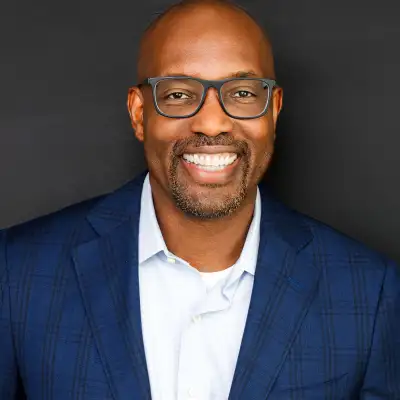
Every Student an Entrepreneur with Jeff Meade
[00:00 - 00:26] Welcome in everybody, you are listening as always to the authority podcast here, the
[00:26 - 00:32] Be Podcast Network. Thanks as always for being with us. We are going to have a really great conversation
[00:32 - 00:38] today about entrepreneurship, about making every student entrepreneur what that means,
[00:38 - 00:46] and the present and future of work, getting kids career ready as they progress into an ever-changing,
[00:46 - 00:51] fast-changing future here. My guest is Jeff Mead. Jeff is the founding director of Entrepreneurship
[00:51 - 00:56] at Paul Quinn College, where he is leading a bold initiative, which is every quinine,
[00:56 - 01:02] is an entrepreneur. This program ensures that every student launches a venture before graduation,
[01:03 - 01:10] not a project, not a mock business, but a real business, making entrepreneurship core life skill
[01:10 - 01:15] rather than an extracurricular option. I'm going to let Jeff tell us more about himself as we
[01:15 - 01:19] get into our conversation here, but for now I'm going to welcome him into the show.
[01:20 - 01:27] Thank you Ross, glad to be here. Yeah, tell us about it. Let's get into, we'll talk a lot more
[01:27 - 01:33] about the program, but I would love to just kind of in the broad strokes have you fill us in a bit
[01:33 - 01:43] in your history here in business, and what led you to getting involved with developing this program.
[01:43 - 01:48] And then we'll go in a lot of other directions from there, but I feel like that'll kind of
[01:48 - 01:51] clue our listeners into the context of what we're talking about here.
[01:51 - 01:56] Yeah, yeah. So I'll go a little ways back. I've been at Paul Quinn since
[01:57 - 02:03] November 2024, and so we're just getting started down this road. But my background is really in
[02:03 - 02:09] marketing and advertising. I've been in that world for the past two decades. I've started agencies,
[02:09 - 02:15] I've grown on, I've scaled them. I've had offers to buy my agencies. And so that's been my world.
[02:15 - 02:20] And for the past couple of years, I was doing management consulting. And I was consulting with
[02:20 - 02:26] agencies to help them grow their business and was doing pretty well. And ultimately, what I saw
[02:26 - 02:32] was there wasn't much diversity in that space. And so for me, I was trying to think of a way to
[02:32 - 02:36] bring more diversity into the space. That's what led me down this road. And I said, man, it would be
[02:36 - 02:42] great to figure out how to get more agencies that look like me in this world. And I kind of pulled
[02:42 - 02:47] on that thread a little bit, started going down that road. And as I went down that road, I realized
[02:47 - 02:52] I didn't just want more agencies. I wanted more diverse entrepreneurs. I want to be a part of
[02:52 - 02:57] that journey for more diverse entrepreneurs. And so I started saying, maybe I could build something
[02:57 - 03:03] with a school. And I had this bold idea. And it's partly fueled by I went to Babson College
[03:03 - 03:11] undergrad and Babson College is number one school of entrepreneurship in the world. And they did
[03:11 - 03:17] some innovative stuff. And I thought, man, it would be great if we had a program where every student
[03:17 - 03:23] who came to this school had to start a business. And not just started a business for to say that
[03:23 - 03:29] you started a business. But really, I love when people start businesses, how they think and act
[03:29 - 03:34] differently, right? There are a lot more creative where other people see problems. They see
[03:34 - 03:38] opportunities. And that was the mindset I wanted to shift for a lot of students. And so
[03:39 - 03:44] we do it under the banner of every Quinnites and entrepreneur. Every student who comes to Paul Quinn
[03:44 - 03:49] has to start and operate a business. And it's been great. You know, past year and a half,
[03:49 - 03:54] that model is changing a bit. When I came in, I said, man, everybody has to start a business. And
[03:54 - 04:00] now molding that a bit and starting to think of ways that we can maybe look at franchising
[04:00 - 04:05] opportunities. How do we scale eventually that's already there? How do we make it bigger? And so not
[04:05 - 04:09] everybody's going to start a business, but we still have that entrepreneurship hat.
[04:10 - 04:17] A lot of sense. And I referenced, I think venture-based learning and the kind of the introduction
[04:17 - 04:22] there. Can you define that a bit for us this approach? What that means? Yeah. Yeah, venture-based
[04:22 - 04:26] learning is great. Venture-based learning is in many ways this experience you're learning with
[04:26 - 04:33] stakes, right? Experiential learning, that model makes a lot of sense for people. But intuitively,
[04:33 - 04:38] there are no stakes involved, right? And like you do a project and there's some reality based
[04:38 - 04:42] to that. And you're like, oh, this is great. With venture-based learning, we're saying
[04:43 - 04:47] we're going to teach you marketing. But the way we teach you marketing is you're going to go out
[04:47 - 04:51] and get a customer. And then you're going to sell to that customer, right? Venture-based learning also
[04:51 - 04:56] says, yeah, we're going to teach you finance, but you're going to operate as a CFO of a business
[04:56 - 05:00] that's growing, right? So we teach you all the theoretical stuff, but there are actually stakes here.
[05:00 - 05:04] You know, part of your grade is can you actually get this venture to launch? Can you actually get
[05:04 - 05:09] customers? So you're actually running a business. And so there are very real stakes involved in that
[05:09 - 05:14] process. And that's the kind of rigor and the stress that we want to put our students on this so
[05:14 - 05:18] they can actually learn, right? There's been, as far as many times I've been in conversations and
[05:18 - 05:22] people will say, you know, as a college education is still worth it, right? And I think people have
[05:22 - 05:27] those conversations because they're used to what it used to look like when they were in school. And
[05:27 - 05:33] you just read books and regurgitate information. And with my experience actually running a business,
[05:33 - 05:37] I realized that some of that stuff is cool just for baseline knowledge, but there's some stuff you
[05:37 - 05:43] actually have to experience to actually run a business and be successful. And that's the experiences
[05:43 - 05:47] that we're given to our students. You know, this is what it's like to be an entrepreneur. This is
[05:47 - 05:52] what it's like when a customer, you know, says they're going to buy it, but they don't they return
[05:52 - 05:57] to product, they're going through all of that. So so venture learning is it's experiential
[05:57 - 06:04] learning what stakes real stakes. Yeah. Yeah, it makes a lot of sense. And I could track with that
[06:05 - 06:12] some of the skills and, you know, component skills, mindsets that students would develop by
[06:12 - 06:19] being a part of that would be beneficial whether or not they continue to be an entrepreneur
[06:19 - 06:25] a long term or continue, right? You know, to be in a space where they want to run their own
[06:25 - 06:33] business, but any kind of work they go into the understanding of the stakes behind it makes you
[06:33 - 06:38] smarter and more strategic in the decisions you make, right? And considering, okay, what are the
[06:38 - 06:45] organizational objectives here? And how am I adding value and distinguishing myself, right? As a
[06:45 - 06:51] contributor here in whatever role I am because I have that understanding that I haven't just
[06:52 - 06:59] come in necessarily at the, you know, the ground level and I'm operating a role and I sort of
[06:59 - 07:07] have the blinders on and I'm just doing quote unquote my job, which is there's a lot of risk in that
[07:07 - 07:14] number one because every business successful, unsuccessful goes through these periods of
[07:15 - 07:22] reorganization, reduction, force, whatever it is, right? And, you know, the first place
[07:22 - 07:30] that you're going to look is, well, who is not really clearly bringing surplus value here, right?
[07:30 - 07:36] Who do I not, who do I not exactly even know? Truly what they do, right? I mean, they could be doing
[07:36 - 07:42] good work, but it's just within a box and it's not having those clear interactions with broader
[07:42 - 07:50] objectives or, all right, disruptions caused by AI, other technologies, you know, the whole kinds
[07:50 - 07:55] of other shifts in the labor force where having the ability to navigate between different roles
[07:55 - 08:00] or picking up new skills, right? Or just showing like this is the kind of person that
[08:01 - 08:07] knows how to learn and knows how to find ways to add value. All of those things, I mean, I think
[08:07 - 08:12] you would learn pretty well through entrepreneurship in addition to, you know, whether you go,
[08:13 - 08:17] I mean, some people will just start their own business probably and continue to do that.
[08:18 - 08:24] Some people will try that, go into a quote unquote day job, then go back to entrepreneurship,
[08:24 - 08:29] some people have a side venture, right? Whatever the case may be, but I do think, you know,
[08:29 - 08:35] even for students who are not necessarily coming in there saying, my major is entrepreneurship,
[08:35 - 08:42] so to speak, that those skills are so so critical in the mindsets and the understanding.
[08:42 - 08:47] Yeah. No, you nailed it. You know, as much as I had a passion to create something like this,
[08:47 - 08:54] as I, when I got to Paul Quinn, I thought what was interesting was the workforce was demanding this,
[08:54 - 08:59] you know, the workforce was saying, we need people who can think and act like entrepreneurs,
[08:59 - 09:03] right? They just kind of threw it out there because what they were saying was we can teach you
[09:03 - 09:08] the skills, right? But we actually don't know the skills that you're going to need in three or four
[09:08 - 09:15] years when you graduate. And because of that, we need you to be able to be mobile. We need you to
[09:15 - 09:20] be able to react to change quickly, right? If I put you in a tough situation, I want to make sure that
[09:20 - 09:26] you can like think your way out of it, right? And so they were saying, this is the type of student
[09:26 - 09:32] we need for this future workforce. And sorry, we don't exactly know the skills we're going to need,
[09:32 - 09:37] right? But we need somebody that we can put in that situation and they will be successful,
[09:37 - 09:41] right? And so we kind of took that and ran. We said, all right, thinking act like entrepreneurs
[09:41 - 09:45] got it, right? We're going to make them actual entrepreneurs, right? There's no better way to do that
[09:46 - 09:52] than actually having them create businesses. And I always say, now when our students go up
[09:52 - 09:57] against anyone else and they can say, yeah, for the last three, four years, you know, I developed
[09:57 - 10:03] this business, we scaled it to X, right? We exited it like this. It's just amazing the collection of
[10:03 - 10:08] experiences that they will have. They will still have internships and all that. I don't believe that
[10:08 - 10:13] most of my students will actually run businesses. But I do know this skill set transfers really well to
[10:13 - 10:18] corporate America, to nonprofits, any organizations that they're going to be looking forward to because
[10:18 - 10:23] we all want people that can think like this, right? We don't need to wrote skills because the
[10:23 - 10:27] wrote skills are changing so quickly. And the wrote skills at entry level, like you said,
[10:27 - 10:33] is just being taken over by AI and all these other trends in the marketplace. So because of that,
[10:33 - 10:40] we need students who can navigate a future that we haven't fully defined yet. And for us,
[10:40 - 10:46] this model works perfectly for that. Yeah. And it strikes me as
[10:48 - 10:57] at least components of the model I'm sure that could be considered by higher ed more broadly
[10:57 - 11:03] just than thinking about one, you know, what are the trend lines as far as students
[11:05 - 11:11] perspectives toward higher education. I know that there's been declines in enrollment and
[11:11 - 11:21] decreased interest, which to me, doesn't really indicate a decreased expression of intent to
[11:21 - 11:29] attend, I guess. Yes. It's to me, it's not necessarily less interest, but it is an ROI
[11:29 - 11:36] calculation. Okay. Well, I can see that tuition is going up. I can see that there's not necessarily
[11:36 - 11:47] clarity or a guarantee of gainful employment or great career fields or that it's not necessarily
[11:47 - 11:54] that, right, that much of enhancement versus going into a trade or another kind of field. So
[11:55 - 11:59] that's really what I'm looking at, right? Or I don't want to take out a bunch of loans to do it.
[11:59 - 12:05] And that doesn't seem worthwhile. Right. All of those things are reasonable calculations. But
[12:06 - 12:12] and then at the universities where they can and should get just more attuned to
[12:14 - 12:20] more being more assertive and proactive, I think, in how they are guiding students pathways
[12:20 - 12:26] and aligning them with career fields. But in this case, also having the humility to know
[12:26 - 12:35] we don't know how the labor force is going to evolve. Right. And if we're equipping you with the
[12:35 - 12:43] skills to create jobs versus just go into jobs that exist. Right. I do think there's a difference
[12:44 - 12:53] in certain fields between saying there's there's no jobs in that field and there's no money in that
[12:53 - 12:57] field. And let me do the same thing. Right. Look at journalism as an example. Right. Yeah.
[12:57 - 13:04] The traditional media is contracting and cutting jobs. But then a lot of journalism journalists
[13:04 - 13:09] are going into entrepreneurship and starting their own ventures, whether it's newsletters, podcasts,
[13:09 - 13:15] whatever it is. Right. And so it's not it's that there's a change in the labor force and it's going
[13:15 - 13:20] to more entrepreneurial versus you're on the payroll somewhere. But it doesn't mean that there's not
[13:20 - 13:25] money to be found for somebody who has the business mindset to combine with their skills and
[13:25 - 13:30] interests and passions and the things they want to do. Exactly. Exactly. Yeah. I mean, we see it all
[13:30 - 13:35] the time. And it's funny you say that, you know, I have a son who's a writer. He's 16 and we're
[13:35 - 13:41] having a similar conversation. You know, he wants he writes books and he keeps packaging his stories
[13:41 - 13:46] in books. And I said, Hey, because I always have my entrepreneurial hat on. I said, you're a storyteller.
[13:47 - 13:52] You don't just write books. And so think of all the mediums you can tell stories to. Right. And so
[13:53 - 13:58] we see it happening all the time. It's the I remember it was this case, this Harvard business case
[13:58 - 14:02] called marketing myopia. Right. And it was really about the railroads back in the days. And so
[14:03 - 14:08] the reason that those guys weren't able to innovate is because they solely saw their business as
[14:08 - 14:13] being in the railroad business. Right. As opposed to the transportation business. So everything that
[14:13 - 14:17] came before, they were the ones that had the capital and the money that they could have invested in
[14:17 - 14:23] everything else, but they didn't because they took this myopic view of we're just railroads.
[14:23 - 14:30] I think now it's on us in higher ed to expand the scope and really say, well, yes, we want to
[14:30 - 14:37] get you these skills, but these skills can transfer to so many different industries. And us going
[14:37 - 14:40] through entrepreneurship doesn't mean we don't have the hard skills, right. Like for anybody who's
[14:40 - 14:45] encountered, they're still taking those classes. Right. But what we're doing is we're actually
[14:45 - 14:49] showing them what it looks like in the real world. So to speak, it's not all theory. It's we're
[14:49 - 14:58] going to show you the practical. And then you're going to actually apply it. What do you advise
[14:58 - 15:07] around the, you know, the multi directional, I guess, interactions between if we look at the
[15:07 - 15:16] three phases of being K to 12 high red and workforce, right. In my observation, I mean, I do think
[15:16 - 15:24] there's been a tightening alignment between K to 12 and workforce and emphasis sometime. I mean,
[15:25 - 15:32] in some areas, maybe more the intent currently than implementation still catching up. But as far as
[15:33 - 15:39] career-connected learning programs and looking at an enhanced kind of definition of college and
[15:39 - 15:46] career readiness and what it means, you know, in secondary grades, right, to have students be thinking
[15:46 - 15:55] ahead and really planning for career in a way that has evolved versus, okay, 20 years ago,
[15:56 - 16:01] after you graduate, then you figure out your next step for me. Yeah. And you're either going to
[16:01 - 16:06] college or you're not. And then you go for it, right. But I feel like there really is an
[16:06 - 16:15] opportunity for one, like the higher ed system to be more actively engaged in both pieces of that,
[16:15 - 16:23] which could help to validate efforts being made in K 12, right, and tighten the alignment between,
[16:23 - 16:30] okay, this also is a way to create demand for higher ed because we're showing how these pieces
[16:30 - 16:36] work together and then the workforce as well. But I'm interested in, you know, your thoughts on
[16:37 - 16:42] how that could look and how that could support, you know, I think an effective
[16:43 - 16:48] transformation within the higher ed system, right, because we're all familiar with the debates
[16:48 - 16:54] that have taken place and how it becomes a this versus that for a long time. It was
[16:55 - 17:04] going to college is the ideal and, you know, other things are plan B and, you know, it almost
[17:04 - 17:14] shifted in a lot of ways, at least for a lot of segments within the discourse as to not even,
[17:14 - 17:24] you know, beyond it's not better than or worse than or it's not necessary to have to go to college
[17:24 - 17:30] and have a good career, but almost you're dumb if you do go. Like why would you because you can come
[17:30 - 17:37] out of school and make 80K, 100K, whatever in this field, you know, which again has some truth to it,
[17:37 - 17:44] but it also isn't the full story as far as what your long term growth potential is if you don't have
[17:45 - 17:51] an education in certain areas to build on. Right. Yeah. No, that's a good question. I think the big
[17:51 - 17:56] thing is as much as I work at a college, I do believe colleges and they're for everyone.
[17:56 - 18:02] Right. I do believe there are certain careers where you can do just fine going from K through 12
[18:03 - 18:08] and then going out into the workforce. And I feel like there's a lot of companies who have built
[18:08 - 18:14] programs that make that transition a whole lot easier. Right. So I'm all for that. What I think
[18:14 - 18:20] college does a good job of is exposure. Right. And so for myself and I remember when I was in
[18:20 - 18:27] school and for many of my colleagues, you think you know what you want to do at 1718. And then
[18:27 - 18:32] you get placed in this environment and the world starts to open up. And you're like, well, yeah,
[18:32 - 18:36] you know, I thought I was good in numbers. Like I'll take myself for instance, like I was really good
[18:36 - 18:41] at math. And so I was like, oh, people kept saying you should be an engineer. And part of it didn't
[18:41 - 18:46] feel right. And you know, as I started getting older and I got introduced to business, I was like,
[18:46 - 18:51] well, this feels more right. Right. And so college exposes you to different things. And that's
[18:51 - 18:56] what I really like about it. You know, there are so many stats and I don't want to misquote it. But
[18:57 - 19:03] something like over 60% of students once they land on a college campus, switch their major. Right.
[19:03 - 19:08] And so it's on college, the college is at that level to really expose you to
[19:10 - 19:15] what you could be interested in. Right. When you land on a campus, you choose your major based on the
[19:15 - 19:23] first 17 years of your life, whatever you've been exposed to. And K through 12 can only do so much.
[19:23 - 19:28] Right. They can't expose you to all these possible careers. And so for those that say,
[19:28 - 19:33] hey, I'm a junior, I'm a senior in high school and I know I want to be blank. And to be blank,
[19:33 - 19:38] I just have to go through this work program, this workforce development program, or I can maybe
[19:38 - 19:42] just go straight from high school. That's perfect. But for the vast majority of this,
[19:42 - 19:47] Jill trying to figure stuff out. And I think college provides this soft landing where you can figure
[19:47 - 19:52] stuff out and then start, you know, whether it's an internship, whether it's a school like us,
[19:52 - 19:57] where you actually get to launch something, but you get exposure to so much stuff. So I think that's
[19:57 - 20:04] the piece that we feel between, you know, the workforce and K through 12 is that you're able to see
[20:04 - 20:10] what you could be. Right. It's so tough to say, this is what I want to be at 17, right. And then
[20:10 - 20:15] make that decision. And hey, you know, five years later, you're like, all right, this isn't what I
[20:15 - 20:19] want to do. So I got to figure some stuff out. You know, maybe I take some certification classes,
[20:19 - 20:24] maybe I'm taking some night classes in school, whatever. But I think it's a lot to ask of somebody
[20:24 - 20:31] to say, I figured it out. I know what I want to do at 17. That's tough. Yeah. Yeah, I think of,
[20:31 - 20:37] you know, it's not linear anymore. And it needn't be. And it's good to create
[20:38 - 20:43] systems that account for that to say, okay, I'm going to, you know, when I'm graduating high school,
[20:43 - 20:50] I don't really exactly know what I want to do. So rather than potentially wasting my time and money
[20:50 - 20:57] going into a program that I have no idea about. Let me go work for a while. Think about it.
[20:57 - 21:04] Go back to school later. Maybe I go and I, you know, work in a field where I get some experience
[21:04 - 21:10] and make some money and then I go and get a business degree because I want to own my own business
[21:10 - 21:16] in that field. And now I've had some experience. Or now I figured out what I'm interested in. And it's
[21:16 - 21:23] good to, you know, it's good to understand that's often how it might work best that you have a student
[21:23 - 21:27] who's a couple years further out, a couple, you know, a little bit more knowledgeable about
[21:27 - 21:33] themselves about what's of interest to them. And, and then you come in, you know, with that
[21:33 - 21:39] perspective, I'm interested in the students that come into your program. How many are, you know,
[21:40 - 21:49] coming in with a clear conception of what it means to get involved in entrepreneurship. How many of
[21:49 - 21:54] them are sort of learning once they get there. How are you defining it for them, right? As they're
[21:54 - 22:00] getting started. I'm sure that there's a wide range, right? Of the, of what they have in mind
[22:00 - 22:05] and what they think and expect when they come in. Right. Right. Well, I will say our admissions team
[22:05 - 22:11] does a great job when they're out at different events and selling this and saying that, you know,
[22:11 - 22:15] you come to Paul Quinn, you're expected to start a business, right? And so if you're looking at
[22:15 - 22:18] different schools and somebody says this, it sounds really cool. And you're like, oh, you guys
[22:18 - 22:22] will help me start a business. Oh, wow, there's a seed fund. So you'll actually invest. So this is
[22:22 - 22:27] a real business. I think it sounds great, you know, and then when students get there, they're like,
[22:27 - 22:33] oh, we really have to start a business. And this is really tough. And, you know, that's usually
[22:33 - 22:37] what I hear. Like, it's just really hard. And I tell them, it's supposed to be hard, right? And
[22:37 - 22:42] then no one ever starts a business and be like, oh, it's a piece of cake. It just doesn't happen.
[22:42 - 22:47] So, you know, we have students coming in through all majors. No one gets to duck it. Everybody has
[22:47 - 22:55] to start a business. And I think what I've found most surprising is that they are excited about
[22:55 - 23:01] it. Going through a process, they realize how tough it is. And for those who are embracing it,
[23:01 - 23:05] they're like, man, I could see, I could see start in my own business, right? Like the businesses
[23:05 - 23:09] they're starting, it's not going to be the end all beat. There's probably a couple folks that I'm
[23:09 - 23:14] like, oh, we're going to pray, we're going to highlight your business because this has legs to
[23:14 - 23:19] grow. And then a lot of people are like, you know, this is a good side hustle. I can definitely make
[23:19 - 23:25] some money here. So the skills that they're learning is amazing. Yeah, I do think one of the things
[23:25 - 23:31] that's probably most true of the future of work is that almost nobody's only going to do one thing.
[23:31 - 23:35] Whether that means they're going to change careers, whether that means they're going to have
[23:35 - 23:41] multiple careers at the same time or a side business or, you know, have a side business that turns
[23:41 - 23:49] into their full-time thing just with the availability through digital businesses and technology
[23:49 - 23:55] that it just makes it something that people can access through changes that are sometimes
[23:55 - 24:01] going to be forced upon people in where jobs go and then how businesses change. But it's just
[24:01 - 24:06] good to have that. And I, you know, I would think I don't know if you've observed this early going,
[24:06 - 24:13] but you know, you do, I mean, you just really would learn a lot about yourself and how you best
[24:13 - 24:19] operate and what's your most interested in by having to start your own business in terms of
[24:20 - 24:28] what you're motivated by, right? Are you motivated by mission? Like, I really have to be working
[24:28 - 24:36] on something that I deeply care about at a fundamental level. Are you motivated by money
[24:37 - 24:45] in terms of where you're motivated by something, by freedom, by not having a boss, by, I mean,
[24:45 - 24:53] one of the things for me that I was probably one of the, you know, most enjoyable moments of when I
[24:53 - 24:59] had started my first business was, I think we don't, you know, obviously everything's digital now
[24:59 - 25:05] direct deposit, but you know, when my signature was on the check, right? When I was paying somebody
[25:05 - 25:09] else for their work, because it was like, well, I created economic opportunity for somebody else
[25:09 - 25:14] by starting this business and they got to work and they made money, right? That can be fulfilling
[25:14 - 25:23] too, but I would certainly think, right? There's people that are in jobs that have never had their
[25:23 - 25:27] own business been their own boss, but it's very entrepreneurial. They're in sales, right? And
[25:27 - 25:34] sometimes there's people, friends that I have that are in sales professions that I'm almost jealous
[25:34 - 25:42] that I think I wish I could be motivated by, you know, that, but I wouldn't be able to do it because I just,
[25:43 - 25:49] if I don't really, you know, if it's not just a line to something that I really care about,
[25:49 - 25:56] and you know, inherently motivated, but I can't care. I can't make myself, I can do both. It can
[25:56 - 26:02] be, you know, a mission that matters to me and something where we can really be creative about
[26:02 - 26:08] the economics and, you know, and seeing how much money we can make doing it, but it can't be that
[26:08 - 26:12] alone, but it's, I would think like when you're faced with it and you're saying, I have to build this,
[26:12 - 26:17] I have to put in the work, like I'm the one that has to go above and beyond. I'm going to learn pretty
[26:17 - 26:24] quickly how I'm motivated, how I'm not, you know, if I like having the freedom, if I like having
[26:24 - 26:31] the responsibility of being the boss or if it's, you know, a solo printer or just being accountable,
[26:32 - 26:36] you know, if I like the theory of that or if I like it in reality, and what does that look like?
[26:36 - 26:41] Right. Now, it's interesting because, you know, kind of just hearing you talk and hearing and
[26:41 - 26:46] thinking about the experience we're going through, right? Like what I like about it is, you know,
[26:46 - 26:51] traditionally students to get ahead, you know, you're really, yeah, students are going to say something
[26:51 - 26:55] like, you know, will this be on the test, right? So they can game it, they know what to study for,
[26:55 - 27:01] but students in my class, they don't talk like that. There's no, is this going to be on the test?
[27:01 - 27:06] Because that's not what we're optimizing for, right? Like you're trying to optimize for
[27:07 - 27:11] how can I scale this? How can I make this successful? And so you're not waiting on somebody,
[27:12 - 27:16] you're actually trying to dictate and you're trying to create the future for yourself.
[27:16 - 27:20] It's really amazing to see students go through that and you touched on it earlier.
[27:21 - 27:25] It's just amazing for them to start reflecting and really start to get to know themselves. Like,
[27:25 - 27:30] what am I good at? You know, you start handing them saying that, you know, and in my group meetings,
[27:30 - 27:34] I should have spoke up more, right? Like I wanted to go this direction, but I kind of laid back,
[27:34 - 27:40] but I should have spoke up more. And I just think that's an amazing experience at this age,
[27:40 - 27:45] because we all go through it in the workplace, right? Like when you should have spoken up or,
[27:45 - 27:52] you know, how do you galvanize a group and get them to do what you think is best for the group?
[27:52 - 27:56] Those are all those soft skills that are really hard to learn unless you're in that environment,
[27:56 - 28:02] but through this, through venture-based learning, students are able to be put in those
[28:02 - 28:07] experience, learn about themselves, but also see what they could be good at, right? They're just
[28:07 - 28:14] getting so many reps so young, it's fascinating. Yeah, and things that are so valuable to anything they
[28:14 - 28:21] want to do, right? You know, it involved in a lot of interviewing and recruitment lately. And
[28:22 - 28:29] almost always, you can you tell within the first five minutes, this person have a real chance or
[28:29 - 28:36] not. I did have one recently where I sort of changed my mind as it went further through,
[28:36 - 28:41] but usually it's just because you're picturing those dynamics. Could I see this person
[28:41 - 28:48] being able to influence cross-functional partners or, right? Can I see them being able to really
[28:48 - 28:53] make a case for an idea? Whether or not I think they have the skills or knowledge,
[28:54 - 29:01] can I see them actually being able to enact it by getting, you know, getting other people on board
[29:01 - 29:06] with it? Those type of things, right? Which you're going to learn in this environment because you
[29:06 - 29:14] have to because it's ultimately because you know what it's like to be the one that's on the line
[29:14 - 29:20] and saying, well, if I'm going to go down, I'll go down, trying it the way I think it should be
[29:20 - 29:25] done, right? Doesn't work at least I did the best that I could, but there's nobody else to hide
[29:25 - 29:33] behind. And how valuable is that in any organization, right? But you have to learn it a lot of times by
[29:34 - 29:41] being there, by doing it, how valuable is it to be working in groups where there is that real
[29:41 - 29:50] stakes to even motivate it and to get, you know, because like one, I'm sure this is as true in this
[29:50 - 29:56] program as in others that I've learned, but I, you know, just especially when I was doing solo
[29:56 - 30:02] consulting, like I also, I spent a lot of time getting involved in different, but just continuing my
[30:02 - 30:09] own education, right? I'm getting, doing a business course over here or a, you know, co-work-based
[30:09 - 30:15] program here. And they're always presented as you get out of it, which you put into it, right? You
[30:15 - 30:21] can get as much out of it. And what I learned pretty quickly and then like communicated back was
[30:22 - 30:27] really you get out of it, which appears put into it, right? Because if it's supposed to be a group
[30:27 - 30:32] thing and you're the only one who's doing anything and you're not getting feedback from
[30:32 - 30:38] people on what you did, right? It's supposed to be peer-to-peer professionals and if nobody's
[30:38 - 30:43] really taking the time to review what each other's working on, give them an idea, make it better,
[30:45 - 30:49] that's, you know, you're really missing out on what the value of that is supposed to be. And the
[30:49 - 30:55] same thing is certainly true in college and grad school and all of that to say, well, I'm here because
[30:55 - 31:01] I'm supposed to be surrounded by other smart people. And they should know things I don't know and
[31:01 - 31:07] vice versa. And we're supposed to make each other better. But, you know, we've all probably been
[31:07 - 31:14] shocked to find, I mean, literally shocked like in higher education, where you were part of a
[31:14 - 31:20] group project that three of the five people didn't do anything. Yes. What is going on here, right?
[31:21 - 31:27] But in this case, I would think there would be incentive to not do that. Yeah, it's tough, I mean,
[31:27 - 31:33] you know, most people don't like group projects. And so, especially coming from high school, where you,
[31:34 - 31:39] I think that K through 12 is doing a better job of group projects now, but, you know, to be thrown
[31:39 - 31:45] into group projects where you're great is determined by other people and you have to learn and figure
[31:45 - 31:52] out what sort of incentives can get, can motivate them to do what you want. You know, that's,
[31:52 - 31:55] that stuff is tough. It's good to learn it now because you're definitely going to need it and
[31:55 - 32:01] whatever job you take in the future. But it is really tough to motivate people who you're like,
[32:01 - 32:07] hey, we're all here. Don't you want to learn? And, you know, maybe they're like, this ain't for me,
[32:07 - 32:11] right? But you still have to rely on them for your success. And so going through those experiences,
[32:11 - 32:17] I think it's just great for students. It sucks for them. And they've told me as much. But, but,
[32:17 - 32:23] you know, it's just a great experience to go through. Yeah, I mean, everything, everything ends up
[32:23 - 32:30] being that you go for, right? There's always other stakeholders, whatever the roles and positions are,
[32:30 - 32:35] whether it's internal, whether it's, you know, external partners, there's always something to
[32:35 - 32:41] account for. There's always a client. There's always an understanding how to navigate some of those
[32:41 - 32:49] things. I mean, I'm sure, right, your time and agency work. It's very similar in how educational
[32:49 - 32:56] that is. And just the number of times you see things and the number of different companies you work
[32:56 - 33:02] with. It's like a scout in pro sports or something that it's like, well, how do you know so quickly?
[33:02 - 33:08] Well, because I've seen so many players that there's things I just really quickly pick up on. And
[33:08 - 33:11] I don't even exactly know what it, but I just can tell you know what, there's something wrong. There's
[33:11 - 33:16] something. But by the time you've been through enough different clients and you've worked with them,
[33:16 - 33:22] there's things you picked up on really fast to say, this is going to go off the rails. I better
[33:22 - 33:28] intervene. This is a positive. This is, you know, there's no recovering from this kind of thing.
[33:28 - 33:36] And it's having that exposure. And you know, but it's a really an accelerator, right? Because then
[33:36 - 33:44] you go and you're in a different role. And you just have way more reps. And you've seen it way
[33:44 - 33:51] more times in a variety of circumstances than people have who have not been in that environment. And
[33:52 - 33:57] it's, you just have a totally different view. Yeah, no, that's such a good point.
[33:57 - 34:01] I mean, what we're really teaching them is pattern recognition, right? So I can put you in another
[34:01 - 34:06] situation. And you can say, huh, this is different, but it rhymes, right? Like I can start to pick up
[34:06 - 34:12] those patterns. And you know, I see it, I've started writing case studies, like business case studies.
[34:12 - 34:18] And you know, and it just, it makes so much sense based on my consulting work in the past, right?
[34:18 - 34:25] And so now when I'm writing these case studies on businesses, it's so hard not to diagnose
[34:25 - 34:29] when I'm talking to them. I'm like, oh, I know what your problem is, right? Like your payroll is
[34:29 - 34:35] x and you're spending this on overhead. And that's not going to work. But that's, it's not for me
[34:35 - 34:39] to solve. I'm just trying to write so my students will solve it. But again, it's like this pattern
[34:39 - 34:44] recognition, like you see it, and you're like, oh, my God, I know what you're doing wrong. But
[34:44 - 34:51] right? That's not my job to solve. Yeah. Well, it can be helpful. It's the combination. It's
[34:51 - 34:55] the combination of, I think of the book learning in the real world, right? And you kind of,
[34:55 - 35:00] you need both. There's certain things you can't learn without some academic study. But it's also
[35:00 - 35:06] can be challenging to apply them because it is messy in a real organization. And, and
[35:07 - 35:13] sometimes you just find yourself thinking, why haven't we figured this out yet?
[35:14 - 35:21] And okay, wait a second. This is not a new thing, but every business is starting from a different
[35:21 - 35:30] point. And, you know, they're not starting with a blank slate. Where are we now? Right. And
[35:30 - 35:37] so everything, you know, wherever you are now is built on every decision that came before
[35:37 - 35:43] that. And so you can't really take that all apart. And then, yeah, who are the people that are
[35:43 - 35:49] involved? How do they approach it? And the more times you've seen it, you can, and again,
[35:49 - 35:55] to the point of how these entrepreneurial skills in that mindset helps you in any role, right?
[35:55 - 36:01] To be the problem solver and the one who can say, okay, let me step in here and take the lead
[36:02 - 36:09] on this project and be a leader, lead by influence, not by title, right? Right?
[36:09 - 36:15] kind of things that are entrepreneurial skills and that position you then to become,
[36:15 - 36:21] right? To have that title because you've distinguished yourself as somebody who actually has
[36:21 - 36:26] the leadership skills, but it's, you know, quickly diagnosing and then going into solution
[36:26 - 36:34] mode is an entrepreneurial skill. Yeah, it's as fascinating to see, right? Because we also,
[36:34 - 36:40] what's unique about Paul Quinn is we are a corporate work college, which means in addition to everybody
[36:40 - 36:47] having a start of business, they also have to work, right? So as they go into corporate and they get
[36:47 - 36:53] these internships, it's really good to see them trying to, and granted, we're in the beginning
[36:53 - 37:00] stages here, but really just seeing these students start to exert influence as an intern, right? Like
[37:00 - 37:07] that's unheard of, right? But really just how can I get this project that they put me on done,
[37:07 - 37:14] right? And not just done, but I have to work with people. And so really seeing them start to
[37:14 - 37:19] leverage those skills in the workplace, but then also when they're on campus developing those
[37:19 - 37:25] skills through the adventure, it's really just cool dichotomy that they get to experience.
[37:25 - 37:31] Very unique. I don't know too many other places doing it. Yeah. Are there a few, like as we're
[37:32 - 37:38] starting to wrap this up, but a few of the tangible elements of the program you want to speak to,
[37:38 - 37:47] like what are some of the real critical mechanisms you have for helping students develop
[37:48 - 37:53] the core skills? What does it look like? Whether it's around kind of the pillars that the program
[37:53 - 38:01] is built around, or just how you believe it best to deliver, right? The lessons that the students
[38:01 - 38:07] are learning. Yeah. Well, I would answer it like this. And so what I'm creating is, you know,
[38:07 - 38:13] I was a business major. And so, you know, I took my core classes, marketing, finance accounting,
[38:13 - 38:19] all that stuff. And so I haven't substituted that. We students go through the same sort of rigor.
[38:20 - 38:28] What I overlay on top of all that is that the professors that I work with is they have to then
[38:28 - 38:35] map it back to adventure, not 100% at a time. But in your accounting class, we're looking at,
[38:35 - 38:40] if it's not even your venture, it's somebody else's venture, right? How do we start to read their
[38:40 - 38:46] P&L? Because again, what I'm trying to do through faculty and with the students is trying to
[38:46 - 38:51] make sure that everything has stakes, right? And so you're not just doing this to get 100,
[38:51 - 38:56] but you're doing this to make sure that you can potentially value a business, right? So they
[38:56 - 39:01] can work on P&Ls for a startup. But what's also what we're also doing was innovative about the
[39:01 - 39:06] program is, you know, I told you in the beginning that I wanted to move away just from startups.
[39:06 - 39:12] And so what that has meant is we are actually looking at businesses that we can buy as a program,
[39:12 - 39:17] right? And that's just a different revenue stream for us. That's us just being innovative. So what's
[39:17 - 39:22] fascinating about that is it opens up this whole portfolio of experiences. And so now going back
[39:22 - 39:28] to the finance and accounting is then as we start to look at businesses, my finance students,
[39:28 - 39:33] they get to do valuation on businesses, right? And it's not just for a project. This is for a
[39:33 - 39:40] business that we might buy, right? And so they go through the fundamental courses that a business
[39:40 - 39:44] student will go through and, you know, anybody taking my entrepreneurship classes. But again,
[39:44 - 39:49] I just layer it with stakes. So it's tied to something that's real, right? And so when you turn
[39:49 - 39:56] something in, it isn't just to get 100, right? It's to make sure that this venture is successful,
[39:56 - 40:00] successfully meeting its goals and objectives, right? And so that's really what it's built around.
[40:01 - 40:06] And then when I start thinking about metrics, it really is how many businesses can we start up,
[40:06 - 40:12] right? How many businesses can we actually have revenue for actually revenue generating businesses.
[40:12 - 40:18] And so we're looking at that as well. But the goal is that 100% of the students start a business.
[40:18 - 40:24] And that in itself is it's lofty by any means. It's a graduation requirement. So they have to start
[40:24 - 40:32] a business. And we have to give them the space and opportunity and framework to actually develop that
[40:32 - 40:41] business. Do you have any long term goals in mind for what you would like this program to evolve into
[40:41 - 40:47] whether it's within the program itself or, you know, potentially in the way it's, of course,
[40:47 - 40:52] branching out either through these businesses or through, you know, developing model.
[40:53 - 40:59] So, and this is probably from my management consultant background. When I got into academia, what
[41:00 - 41:05] what struck me is odd. And it's probably not odd to most people who have been in academia their whole
[41:05 - 41:11] life. But the revenue stream was completely dependent on students, except for a handful of colleges
[41:11 - 41:17] that have huge endowments. But other than that, it's all tuition based. And, you know, if in the
[41:17 - 41:21] consulting world, if you look at that and you see one revenue stream, you're like, well, this is crazy.
[41:21 - 41:26] This is not a sustainable business. And so for me, what I want to do is create a model for
[41:26 - 41:32] small colleges, right? A model where as colleges can start to say, hey, we can have an entrepreneurship
[41:32 - 41:39] program that not only teaches the students how to be entrepreneurs, but actually the DNA of the
[41:39 - 41:44] school changes because we as an institution, we as this department will start acting like entrepreneurs
[41:44 - 41:50] as well. And so by doing that, I think it's important that the department starts to
[41:50 - 41:56] invest differently. And so we are raising, we have a seed fund that we have available for students,
[41:56 - 42:01] but we're also we also have a development fund. And that development fund is so that we can buy
[42:01 - 42:06] businesses. And some of these businesses will be on campus. Some of them will be in and around Dallas.
[42:07 - 42:11] And it's going to be a great place for our students to work. But I think this model, you know,
[42:11 - 42:16] where we're actually owning businesses, we will be able to profit from that. And that money will be
[42:16 - 42:20] able to come to the school. And we can put some more money into the businesses. But I think that
[42:20 - 42:26] model is a model that I want other small school small colleges to adopt, right? I think that that
[42:26 - 42:31] can help small colleges be sustainable because right now the model isn't sustainable, right? Your
[42:31 - 42:39] tuition dependent. And a lot of you revenue comes from the federal government and the federal government
[42:39 - 42:44] has said we're not going to support higher ed the way we have done in the past, right? That's the trend.
[42:44 - 42:49] And so if that's the case, you got to figure something else out. And I think this can be a
[42:49 - 42:54] sustainable model going forward not only for Paul Quinn, but for small colleges in America. So that
[42:54 - 43:00] is my vision. Thanks. Well, Jeff, it's been really great to have you on the show. It's been really
[43:00 - 43:05] enjoyed the conversation. Is there anything you'd like our listeners to check out any website or
[43:05 - 43:11] anything you want to point them to? Yeah, please check out Paul Quinn.edu backslash entrepreneurship.
[43:11 - 43:18] Great site to go do and check out. And if you want more about me, go to Jeff hyphen mead.com,
[43:18 - 43:23] me to spell mead.com and look forward to hand from you.
[43:24 - 43:30] Excellent. Well, we will put those links in the show notes below listeners to where you can
[43:30 - 43:37] learn more about Paul Quinn's entrepreneurship program about Jeff at his website and also how to
[43:37 - 43:42] connect on LinkedIn. So check that out all out below. You can learn a lot more about this.
[43:42 - 43:48] Really, you know, interesting, innovative program here and certainly something that we can all
[43:48 - 43:54] learn something from as we think about what does it really mean to prepare students who are
[43:54 - 44:01] future ready and ready to have success in career or whatever their path is to getting there and
[44:01 - 44:07] to creating the jobs of the future. You know, you may be developing your own future employer. So
[44:07 - 44:13] do a good job. But learn more about that. And Jeff, thanks again for being here.
[44:13 - 44:22] Ross, thank you so much for having me. It's been a pleasure.
Creators and Guests